
Search Delaware Divorce Records
Delaware divorce records are held at the county level by the Family Court in each of the state's three counties. New Castle County, Kent County, and Sussex County each keep their own case files for divorces granted from 1975 to today. To look up Delaware divorce records, you contact the Family Court in the county where the case was heard. You can also run a basic case search online through CourtConnect, the state's public court portal. For older files, the Delaware Public Archives holds records that pre-date the Family Court system.
Delaware Divorce Records Overview
Where to Find Delaware Divorce Records
The Family Court is the main keeper of Delaware divorce records. Each of the three county Family Courts has a Records Department that holds the case file for every divorce granted in that county from 1975 forward. The file has the petition, the answer, any agreements, and the final decree. Staff can pull records by name or case number. The Delaware Family Court has exclusive jurisdiction over divorce in the state, which means every divorce case starts and ends here.
The state also has a role in divorce records, but a limited one. The DHSS Office of Vital Statistics can issue a divorce verification letter, which just confirms that a divorce took place. It lists the date and the county. It does not include custody terms, property splits, or the full decree. Vital Statistics offices in Dover, Newark, and Georgetown all handle verification requests. For the actual decree or any paper from the case file, you must go to the Family Court in the right county.
Note: For full divorce decrees, go to the Family Court in the county where the case was heard. DHSS Vital Statistics issues only divorce verification letters, not copies of court papers.
How to Search Delaware Divorce Records
Delaware gives you more than one way to search. Online lookups are fast for basic case info. In-person visits work best when you need certified copies or want to see the whole file. The CourtConnect system is the state's free online portal for court case data. It covers Family Court cases in all three counties. You can search by party name, case number, or filing date. The site shows case numbers, party names, filing dates, case status, and docket entries. It does not show the full decree or financial papers. Those stay with the Family Court.
To search CourtConnect, have ready:
- Full name of at least one spouse
- County where the case was filed
- Approximate filing date or year
- Case number if you have it
You can also visit any Family Court in person. Go to the location in the county where the divorce was heard. The Records Department can pull the file and make copies the same day in most cases. Bring a government-issued photo ID. Mail requests work too. Send a written letter with both party names, the divorce date, your contact info, and payment. Processing by mail takes one to three weeks depending on the county and how old the record is.
Delaware Family Court System
The Delaware Family Court was set up in 1975 to handle all family law cases in one forum. Before that, the Superior Court took divorce cases. Today the Family Court has three locations, one in each county. New Castle County Family Court is at 500 N. King Street, Suite 500, Wilmington. Kent County Family Court is at 400 Court Street, Dover. Sussex County Family Court is at 22 The Circle, Georgetown. Each location keeps its own case files. You go to the one that matches your county. The Family Court locations page has addresses, phone numbers, and hours for all three.
Each court has a Records Department on site. Staff there can answer questions, pull files, and make copies. The Records Departments keep computerized indexes going back to 1975, which means you can find a case even with limited info. Call ahead if the record is old or if you are traveling a long way. For cases with minor children, some details may be restricted under Delaware law. The judge decides what stays open and what gets sealed.
Types of Delaware Divorce Records
Delaware uses the term "divorce" in common speech and in the statute. The main document is the divorce decree, which is the court order that ends the marriage. It spells out the terms: how property is split, what happens with the kids, and any support. Once the judge signs the decree, the case is final. If both spouses agree on all terms, the court can enter a consent decree without a trial. Contested cases go to a hearing before a judge.
A Delaware divorce file normally has:
- Petition for divorce
- Service of process or waiver
- Answer or response from the other spouse
- Financial disclosures
- Parenting plan or custody order, when children are involved
- Ancillary matters order on property, support, and alimony
- Final decree of divorce
Most items in the file are open to the public. Some papers like tax returns, detailed asset lists, and reports about minor children may be sealed or redacted. Social security numbers and account numbers get blacked out before release.
Delaware Divorce Laws and Rules
All divorce law in Delaware sits in Title 13, Chapter 15 of the Delaware Code. This chapter covers grounds, residency, procedure, property, and support. Under 13 Del. C. § 1504, at least one spouse must have lived in Delaware for six months before filing. If both live out of state but got married here, that is not enough. The six-month rule is strict. The court can toss a case if the rule is not met.
Delaware is a mixed-grounds state. Under 13 Del. C. § 1505, the most common ground is "irretrievable breakdown" of the marriage. To meet this, the spouses must have lived separate and apart for six months, or the marriage must show incompatibility so great that the spouses cannot live together. Other grounds include voluntary separation, separation caused by mental illness, misconduct such as adultery or cruelty, and willful abandonment.
Separation Requirement: Delaware requires spouses to have lived separate and apart for six months before a no-fault divorce can be finalized under 13 Del. C. § 1505. Spouses can live in the same house but not share a bed or table for this period.
Delaware is an equitable distribution state, not a community property state. Under 13 Del. C. § 1513, the court divides marital property in a way it deems fair, which is not always 50/50. The judge looks at how long the marriage lasted, each spouse's income and age, and who contributed what. Gifts and inheritances that stayed in one spouse's name are kept out of the split. Child custody falls under Title 13, Chapter 7. The court uses the best interest of the child standard.
Fees for Delaware Divorce Records
Fees for copies of Delaware divorce records are set by each Family Court and follow a common schedule. A certified copy of a divorce decree costs $4 for the first copy. Each extra copy requested at the same time is $1. Non-certified copies are $1 per page. Payment can be made by cash, check, money order, or credit card at most locations. Mail requests should include a check or money order made out to the Family Court.
The DHSS Vital Statistics office has its own fee for divorce verification letters. The charge is $25 for the first letter and $10 for each extra copy asked for at the same time. This is just a letter that confirms a divorce took place. It is not the decree. People use it to prove divorce status for things like passport updates or name changes when the full decree is not needed.
Fee waivers may be granted in cases where the requester cannot pay. Talk to the court clerk about any current waiver process. Filing fees for a new divorce case are separate from copy fees and are set by the Family Court.
Tip: Fees can change. Call the Family Court in your county or check the Family Court website to confirm the latest costs before you send payment.
Historical Delaware Divorce Records
Older Delaware divorce records live in different places based on when the case was filed. Records from 1935 to 1975 are at the Prothonotary's Office in the Superior Court in each county. Before the Family Court was set up in 1975, the Superior Court heard all divorce cases. The Prothonotary's Office keeps these old files in bound books, on microfilm, and in folders. Staff can search name indexes that cover the full period. Fees for these records are $15 for the first three pages of a certified copy and $2 for each page after that. Non-certified copies cost $1 per page.
For records before 1935, the place to go is the Delaware Public Archives in Dover. The Archives is the state's official home for historic government records. It holds divorce files from the Court of Common Pleas for cases before the 1830s, Superior Court records from the 1830s through the 1970s, and equity court papers that cover related matters. The research room is open Monday through Friday. Copy fees run $0.50 per page. Some fragile items cannot be copied but can be photographed by researchers under staff rules. The Archives offers limited email research help for people who cannot visit.
Are Delaware Divorce Records Public
Yes. Court records in Delaware are public under the state's Freedom of Information Act and the rules of court. Most of a divorce file is open to anyone who asks. You do not need to be a party. You do not need to give a reason. The Records Department at the Family Court can pull the file for in-person review or make copies for a fee. The same rules apply for older Superior Court files at the Prothonotary's Office.
Parts of some divorce files are restricted. Custody evaluations, child support worksheets with account data, psychological reports, and other items tied to minor children can be sealed. Financial source papers such as tax returns and bank statements may be kept out of the public view. Social security numbers, bank account numbers, and home addresses get redacted from filings. A judge can order further sealing if a party shows good cause.
Most Delaware divorce records are open to the public. Some items tied to children, finances, or personal safety may have limited access.
Legal Help for Delaware Divorce
Several groups offer legal help for divorce cases in Delaware. Community Legal Aid Society (CLASI) serves people with low income across the state with a full family law unit. Legal Services Corporation of Delaware handles civil legal needs for low-income residents. The Family Court website has self-help forms, instructions, and fee info for people who go pro se. The Delaware State Bar Association runs a lawyer referral service that can match you with a family law attorney. Law libraries at each Superior Court let you look up statutes, court rules, and case law on site.
Delaware Divorce Records Resources
The Delaware Family Court system is the central source for all divorce records filed from 1975 to today. The screenshot below shows the Family Court site where you can find forms, court contact info, and general guidance for divorce cases.
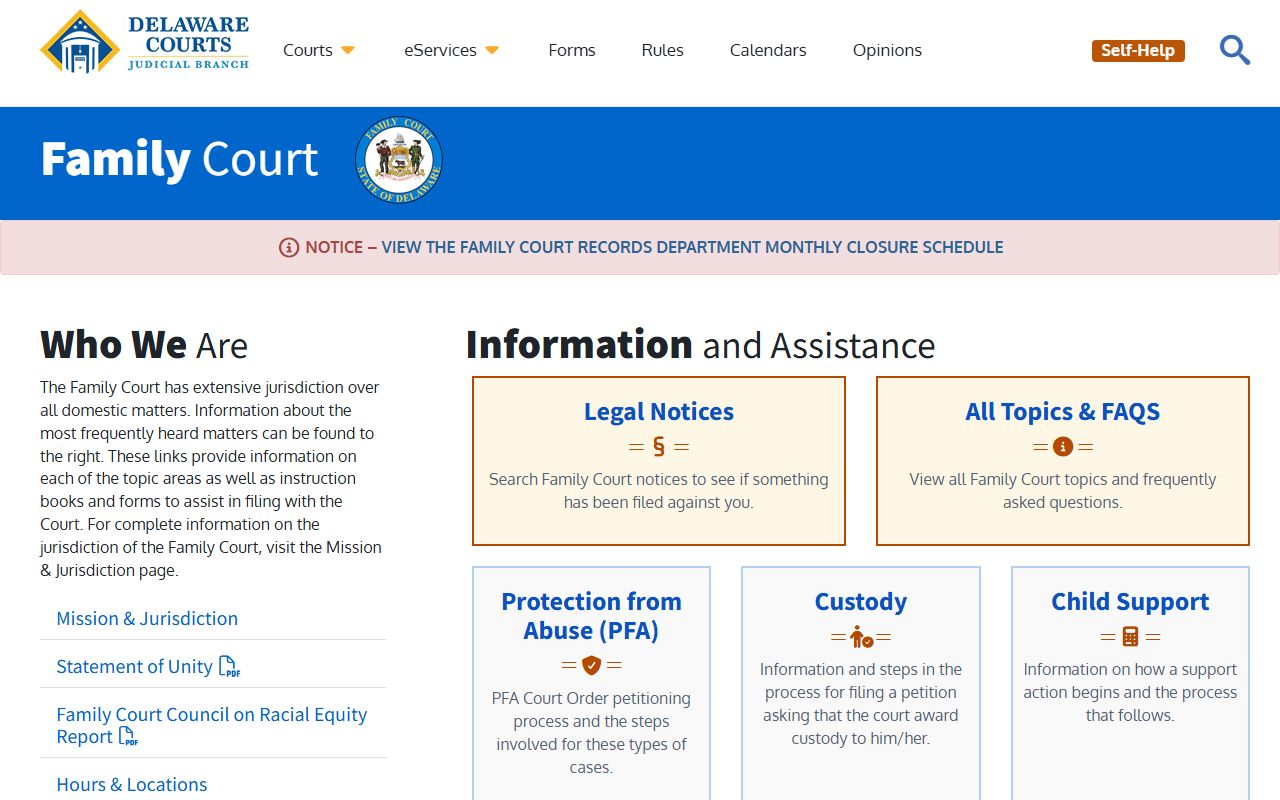
This site links to all three county courts and explains how divorce filings move through the Delaware courts.
Online case lookups in Delaware run through the CourtConnect portal. The site below is the public search interface used to find divorce cases by party name or case number.
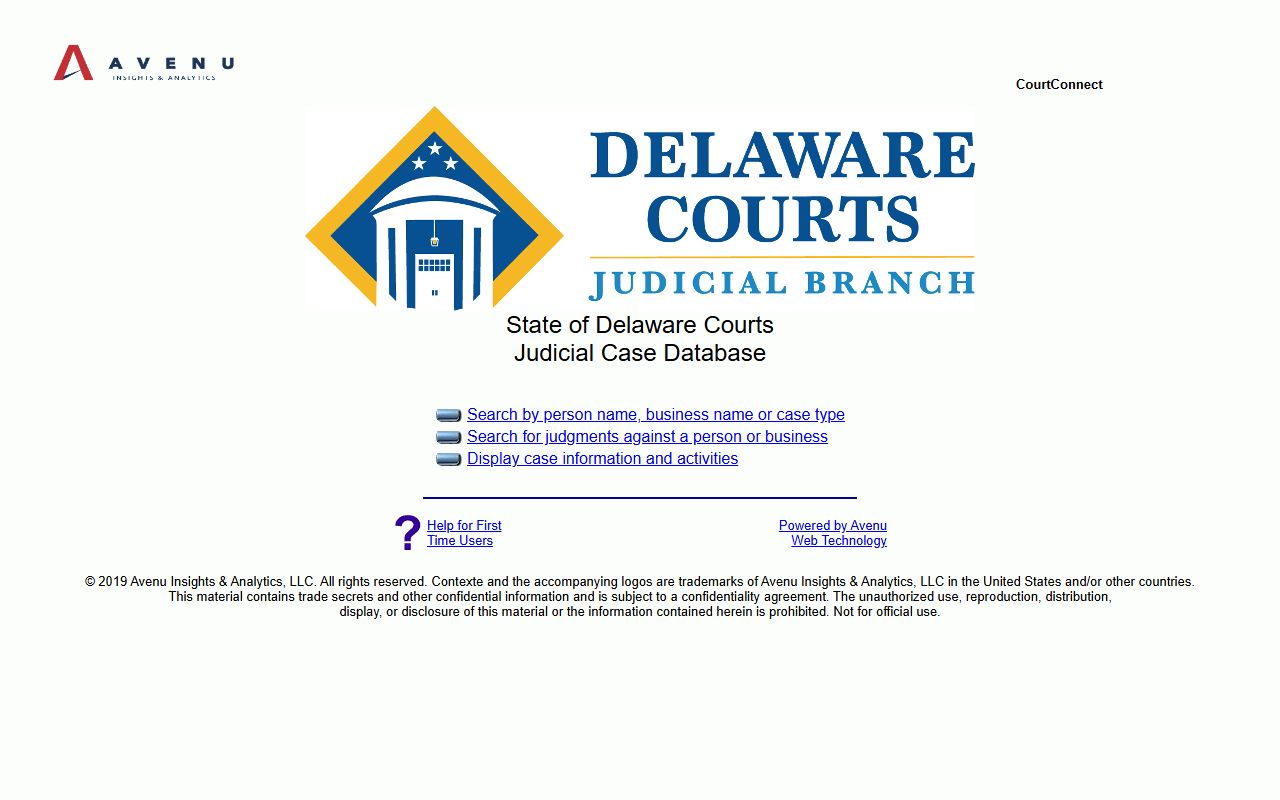
The portal covers Family Court, Superior Court, and other Delaware court cases in one free database.
The Delaware DHSS Vital Statistics office issues divorce verification letters for events after 1935. This page is where you find the request form and fee details.
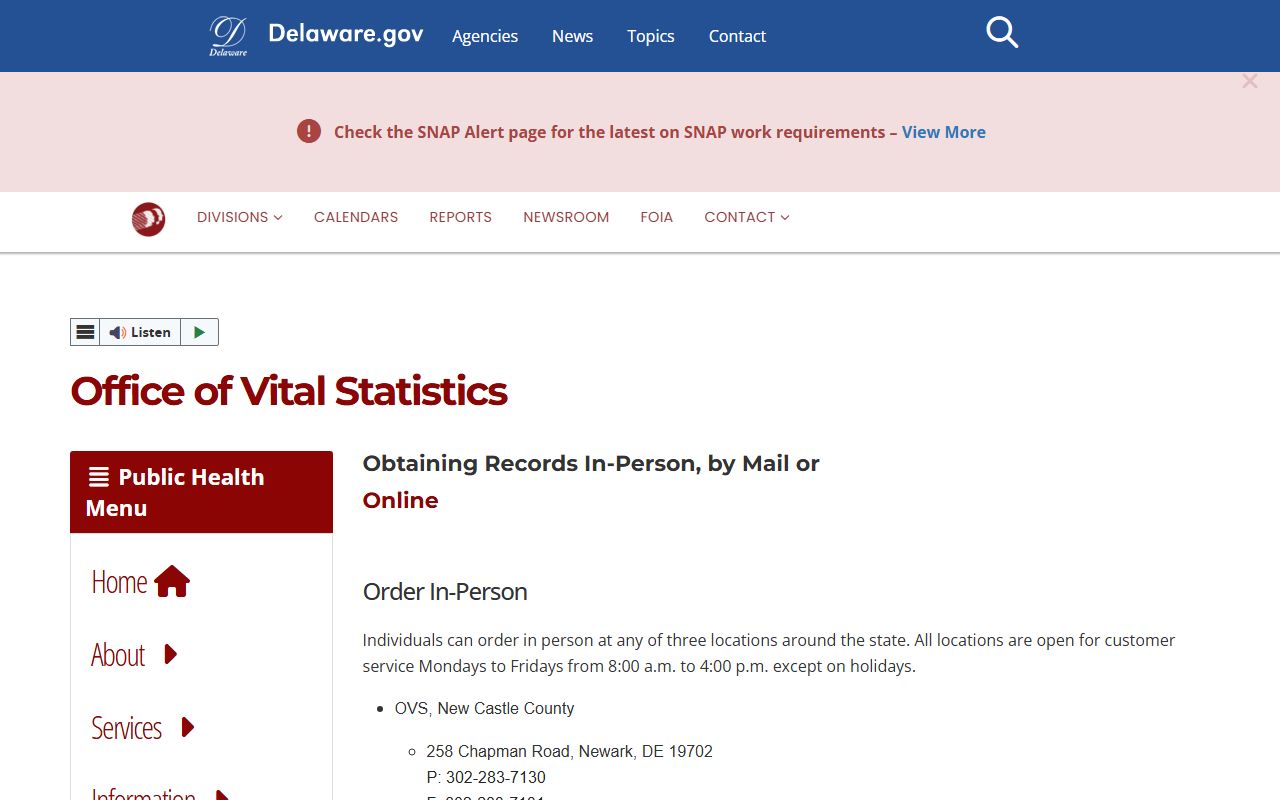
Vital Statistics does not issue full decrees. For those you must still go to the county Family Court.
Older divorce cases live at the Delaware Superior Court, which heard divorce matters before the Family Court was created in 1975.
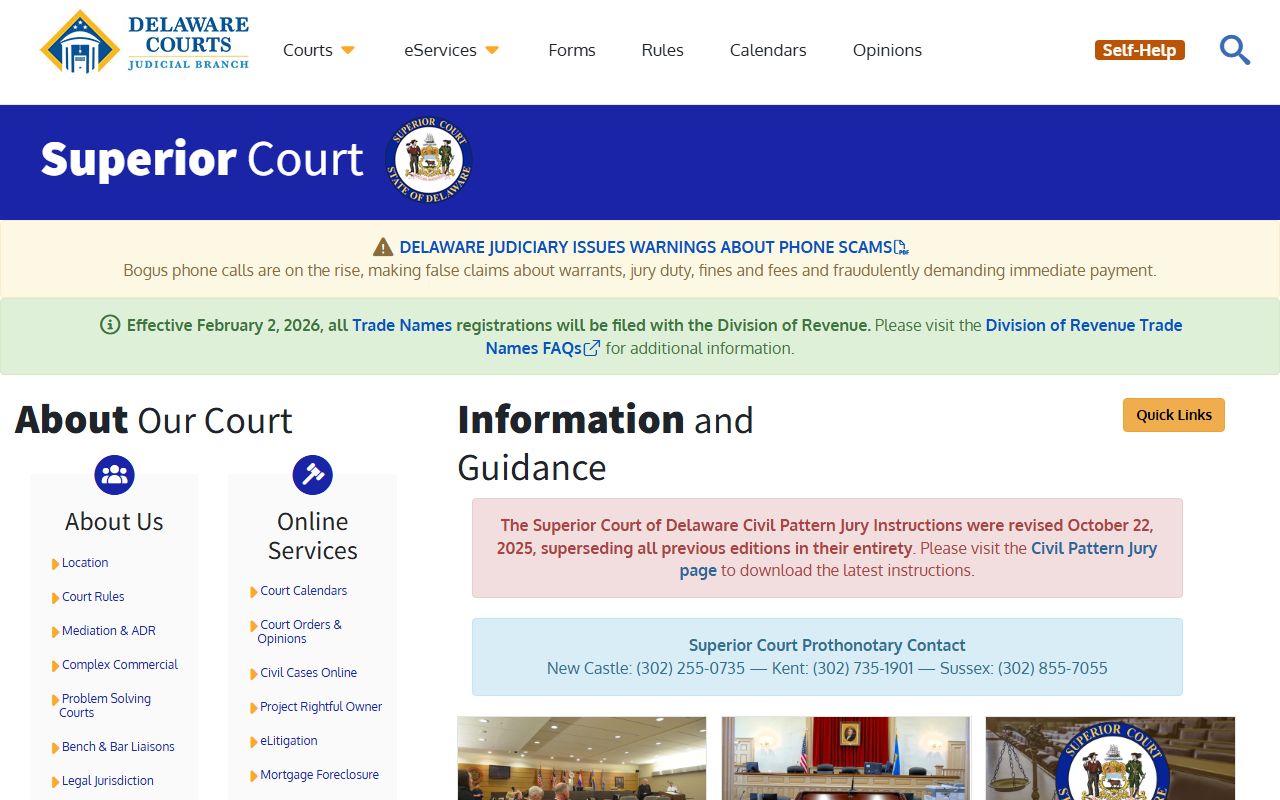
The Superior Court Prothonotary's Office keeps records from 1935 to 1975 in each county.
The Delaware Public Archives in Dover holds historic divorce records from before 1935 and is a key stop for genealogy research.
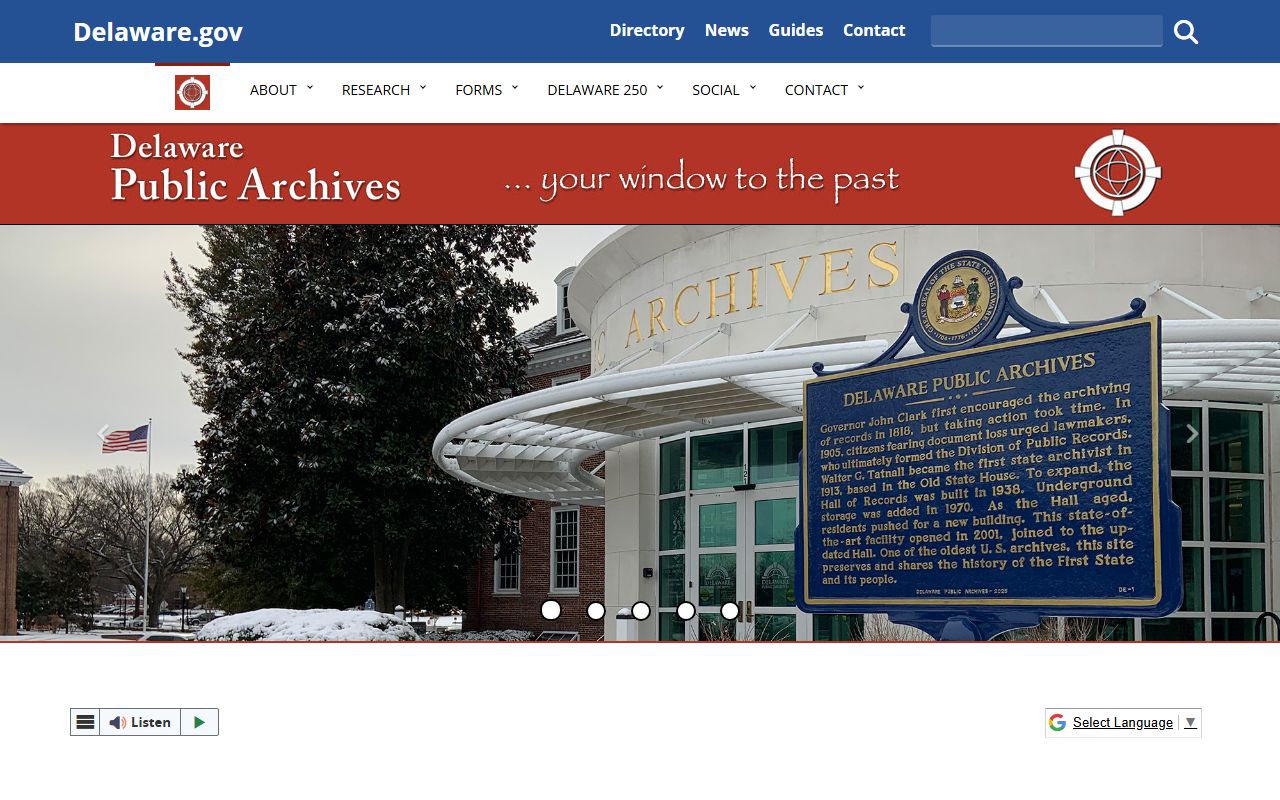
The Archives holds Court of Common Pleas and Superior Court files going back to the colonial era.
The New Castle County Recorder of Deeds holds land records that may include property transfers tied to divorce settlements.
Quitclaim deeds and partition deeds from divorce cases are recorded here separately from the court file.
Land records for Kent County divorces are at the Kent County Recorder of Deeds, which has online search tools for the public.
Divorce researchers use this office to trace how marital real estate changed hands.
For Sussex County, property documents tied to divorce live with the Sussex County Recorder of Deeds in Georgetown.
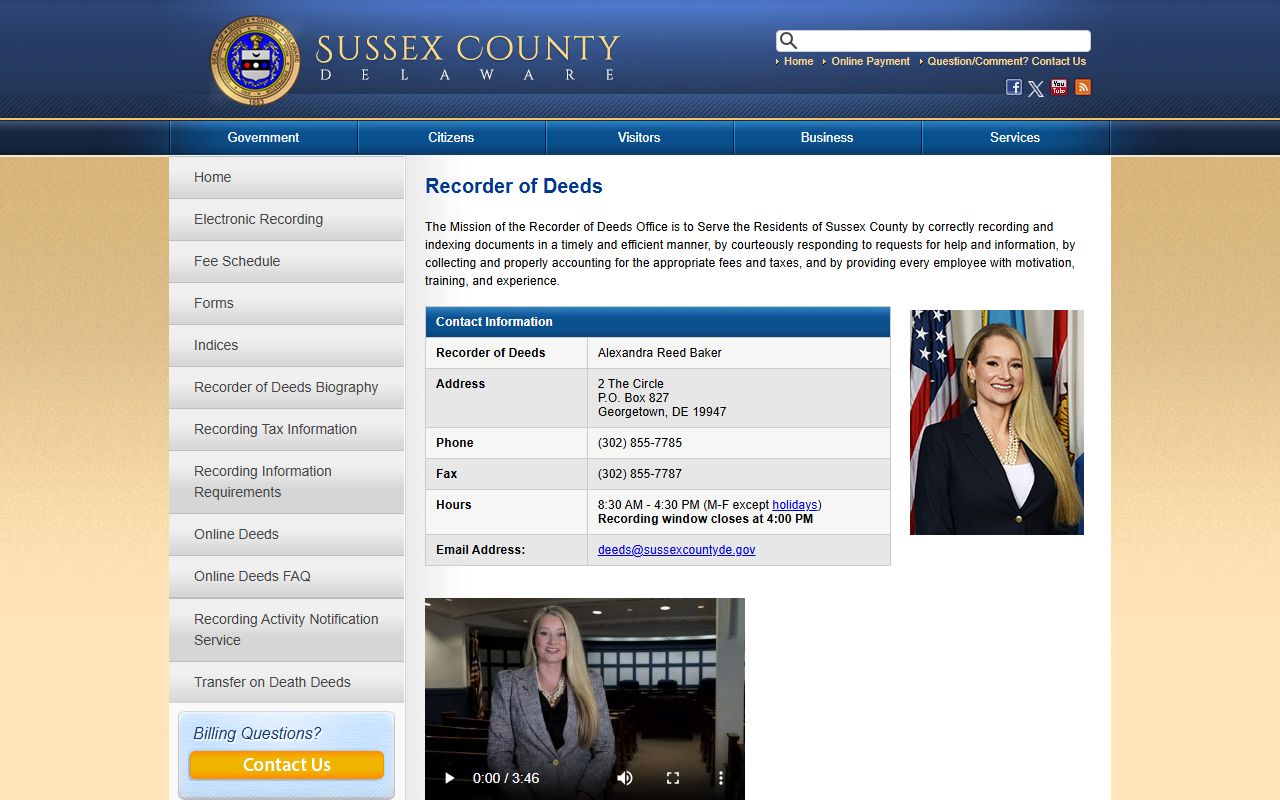
Online deed searches there allow name or address lookups for real estate transfers.
Delaware Divorce Records by County
Delaware has three counties. Each one has a Family Court that handles divorce cases for that area. Pick a county below for the local Records Department, fees, and resources for divorce records.
Divorce Records in Delaware Cities
Residents of Delaware cities file divorce cases at the Family Court in their county. Pick a city below to see which court handles that area, plus local resources and contact info.